About the film
An alcoholic ex-football player drinks his days away, having failed to come to terms with his sexuality and his real feelings for his football buddy who died after an ambiguous accident. His wife is crucified by her desperation to make him desire her: but he resists the affections of his wife. His reunion with his father—who is dying of cancer—jogs a host of memories and revelations for both father and son.
- Director
- Richard Brooks
- Writers
- James Poe, Richard Brooks
- Country
- United States of America
- Language
- English
- Runtime
- 1h 48m
- Trailer
- Watch trailer
Cast

Elizabeth Taylor
Maggie Pollitt
Paul Newman
Brick Pollitt
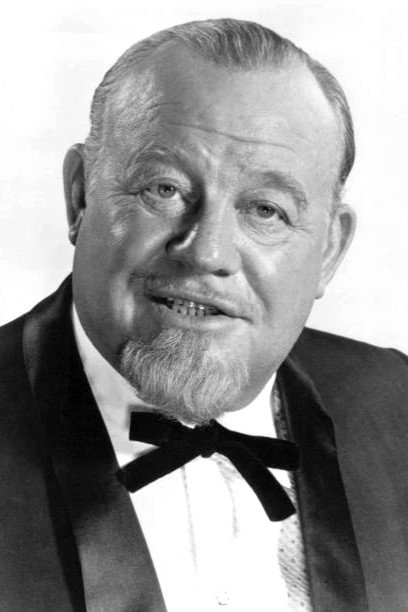
Burl Ives
Harvey 'Big Daddy' Pollitt

Judith Anderson
Ida 'Big Mama' Pollitt
In your journal
- Status
- RewatchLogged with two or more watch dates.
- Your rating
- Favorite
- Not favorite
Viewing history
2 viewings
- First viewingAugust 9, 2026
- RewatchAugust 25, 2026
Review
Versão em PortuguêsHow does one drowning man help another drowning man?
I admit that this is probably the oldest movie I have ever watched — besides Charlie Chaplin’s. Imagine my surprise when I finished it and my first reaction was, “Oh, I need to see this again!” Cat on a Hot Tin Roof is a very dramatic film, but it gifts us with splashes of comedy, and some of the line deliveries are incredibly funny. The story revolves around Brick and Maggie, a married couple with serious marital issues. What exactly caused their relationship to fall apart is something we only discover later in the movie.
Most of their problems seem to come from Brick, a former football player with a drinking problem. The opening scene shows him longing for his golden days — especially the crowds cheering for him. He goes to a football field at night, drunk, and tries to jump hurdles. Obviously, that is not an activity meant to be done under the influence — especially after retirement — and he ends up falling and hurting his ankle. Just to give us an idea of how relevant he and his family are, the injury is important enough to appear in the local newspaper.
Brick is very clearly going through a difficult time, and he seems to hurt Maggie as a way of dealing with his own pain. She shows him almost nothing but love, while his responses are usually aggressive or cold. Maggie’s first appearance in the film also introduces us to the bits of comedy in the script: she gets into a fight with a little girl and gives Mae’s children the mean nickname “no-neck monsters.” When she encounters her husband in their room, she tries to act like a normal wife while he acts as if he hates her.
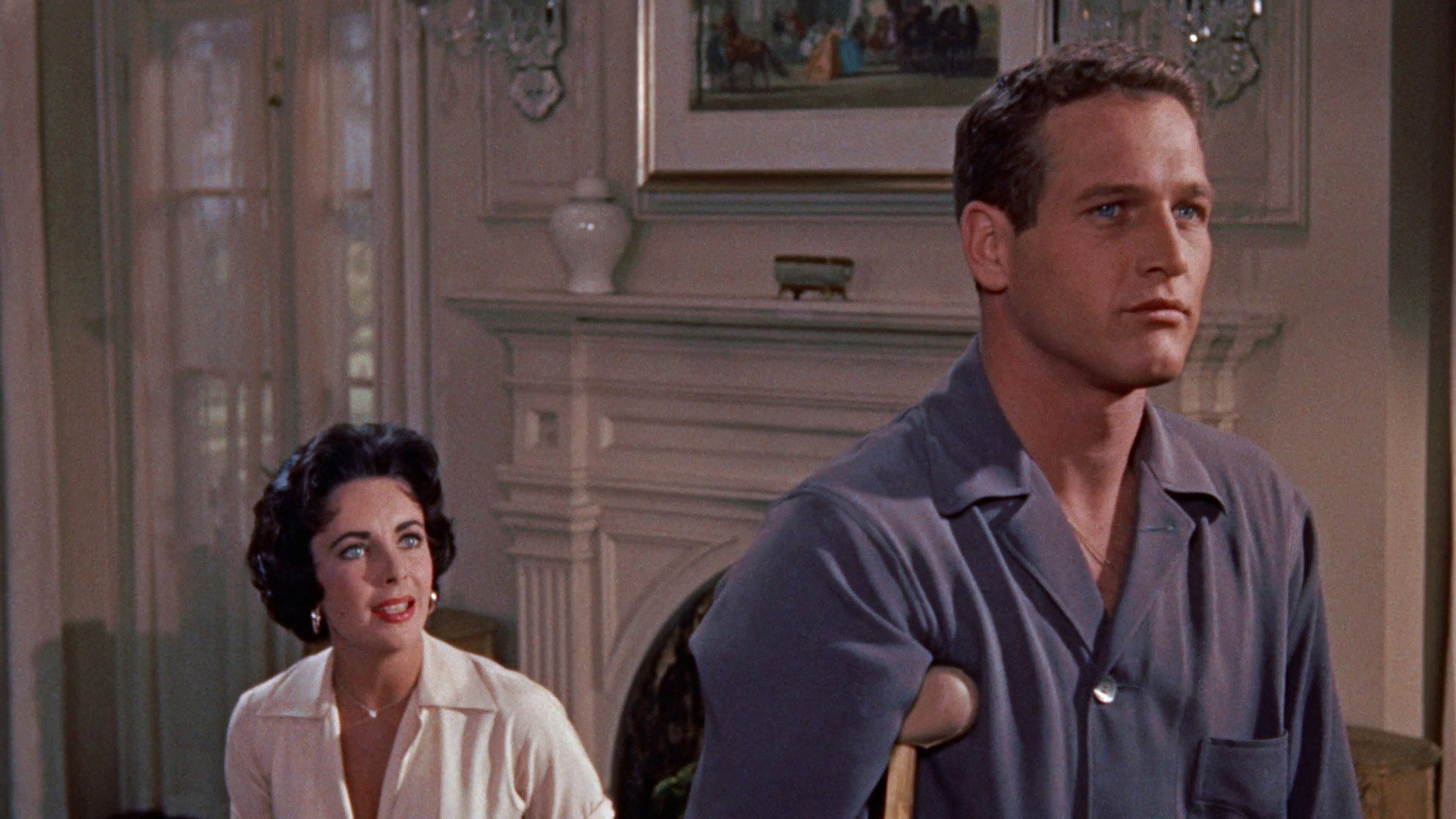
One of the scenes that stuck with me is the one where Brick points his crutch at her almost as if it were a gun. It is not exactly frightening, but it is definitely disturbing, especially because Maggie seems to read the moment partly as an expression of desire. I honestly couldn’t tell whether he wanted her or wanted to kill her. Regardless, the following scenes show just how thirsty she is for his love — both emotionally and physically. His constant rejection makes his anger toward her impossible to ignore.
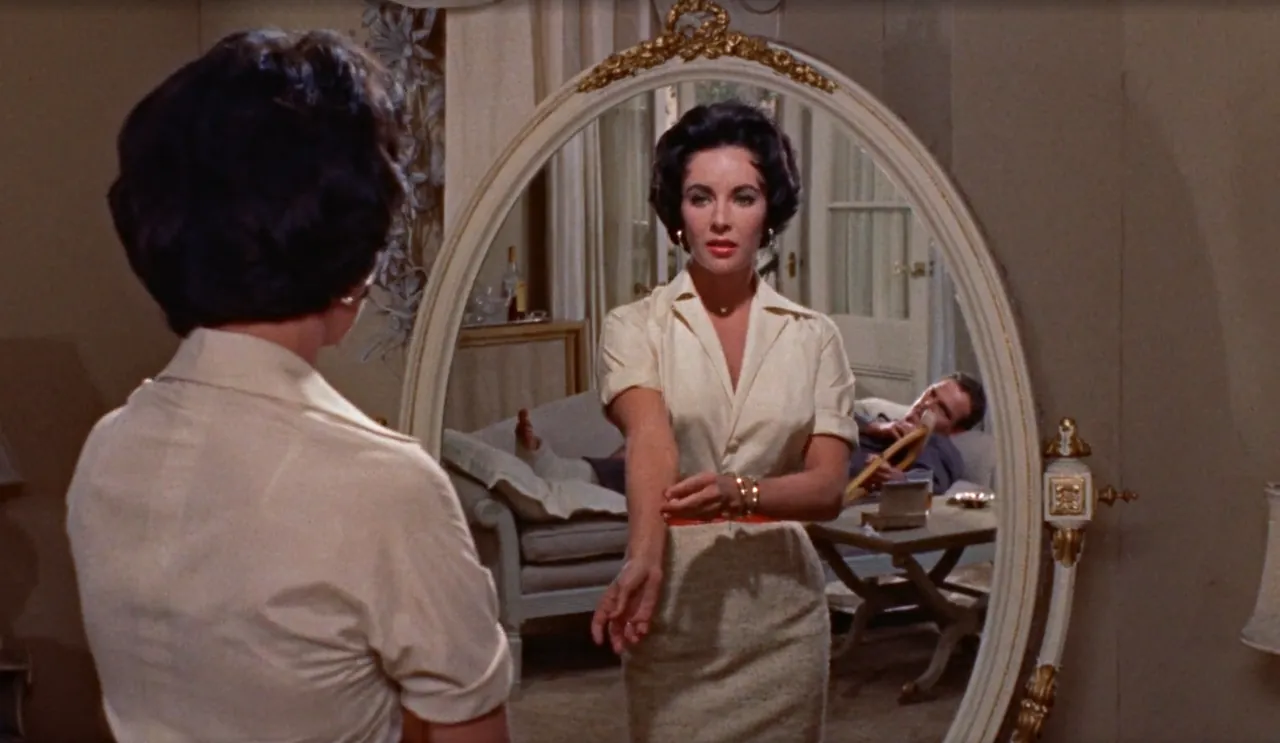
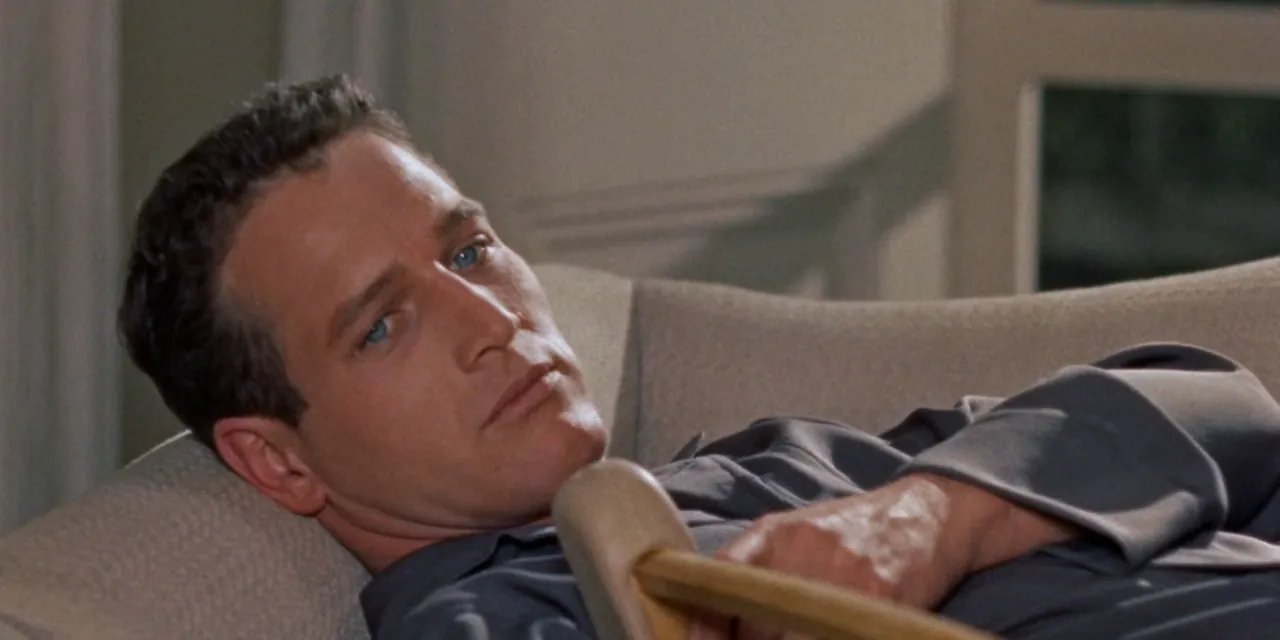
While Maggie is desperately looking for Brick’s attention and affection, he seems completely lost. He is clearly bothered not only by his marriage but by his whole family. Later, we find out that his biggest problem is actually with himself. Another funny moment from Elizabeth Taylor comes from Maggie’s frustration that Brick is always drunk and unpleasant, but, unlike other alcoholics, somehow remains extremely attractive.
Parallel to this storyline, we have another one involving the entire family: the imminent death of Brick’s father, known as Big Daddy. At first, everyone believes he is dying. Then the doctor tells them he will live, only to later admit that Big Daddy is, in fact, dying and that he lied because of “professional ethics.” All this after Big Daddy had been thrilled by the news of his supposedly good health and had immediately started making plans for his future.
If a family can lie to someone about his own death and almost everybody believes it is the right thing to do, it makes us wonder how present lies are in their everyday lives. As the movie goes on, everyone seems to be living inside some kind of lie, and this deeply bothers Brick, who repeatedly gives this behavior a name: mendacity. The lie about Big Daddy’s diagnosis also makes mendacity more than just an individual flaw. The entire family participates in it together, which makes dishonesty feel almost like the language they use to keep the family functioning.
The story takes place at Big Daddy and Big Mama’s home during his birthday celebration, surrounded by people trying to secure a piece of his inheritance while hiding the fact that he is dying. Gooper, Brick’s brother, and his wife Mae seem especially interested in convincing Big Daddy that everything should be left to them, before he even realizes that he may have to make that decision much sooner than expected.
I also found it surprisingly satisfying when the movie refers directly to its own title, and the way that line was delivered was pure gold to me. Maggie says that she feels like a cat on a hot tin roof and that she will stay on it for as long as she can. It doesn’t matter how much it hurts: she is willing to keep fighting for her husband’s love. Maggie then summarizes their relationship crisis really well:
I’m not living with you. We occupy the same cage, that’s all.
Brick is trapped in a relationship with someone he currently seems to despise, while Maggie is trapped in a relationship without love. She is so affected by his indifference that when he screams at her, her first reaction is to see it as a good sign, or at least something better than the silence and cold treatment she has grown used to. As she says, she doesn’t mind making a fool of herself over him.
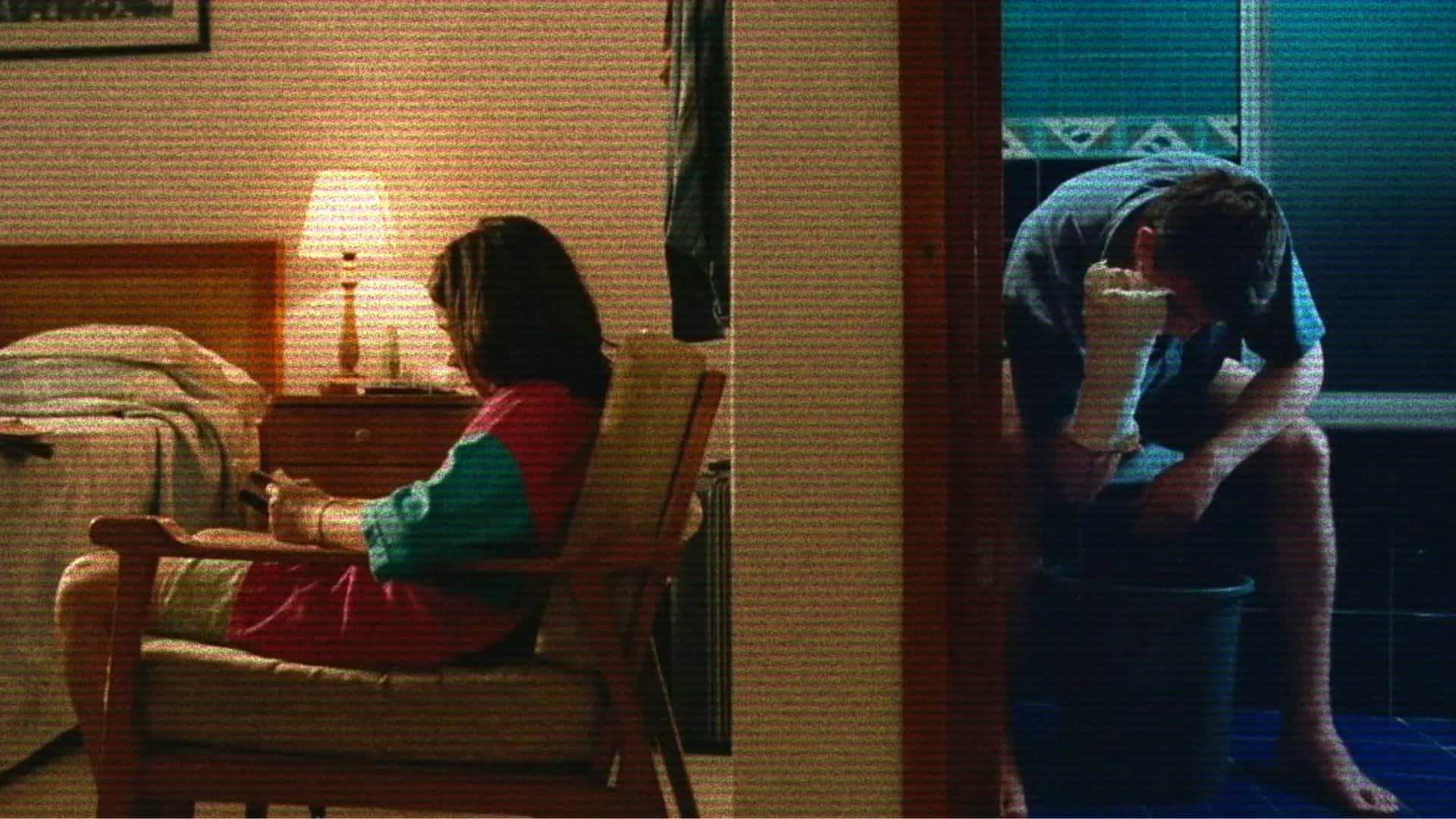
During their conversations, the impression that remains is that Brick genuinely detests her. But then we get a scene where he goes into the bathroom to escape from her and breaks down while holding one of her gowns.
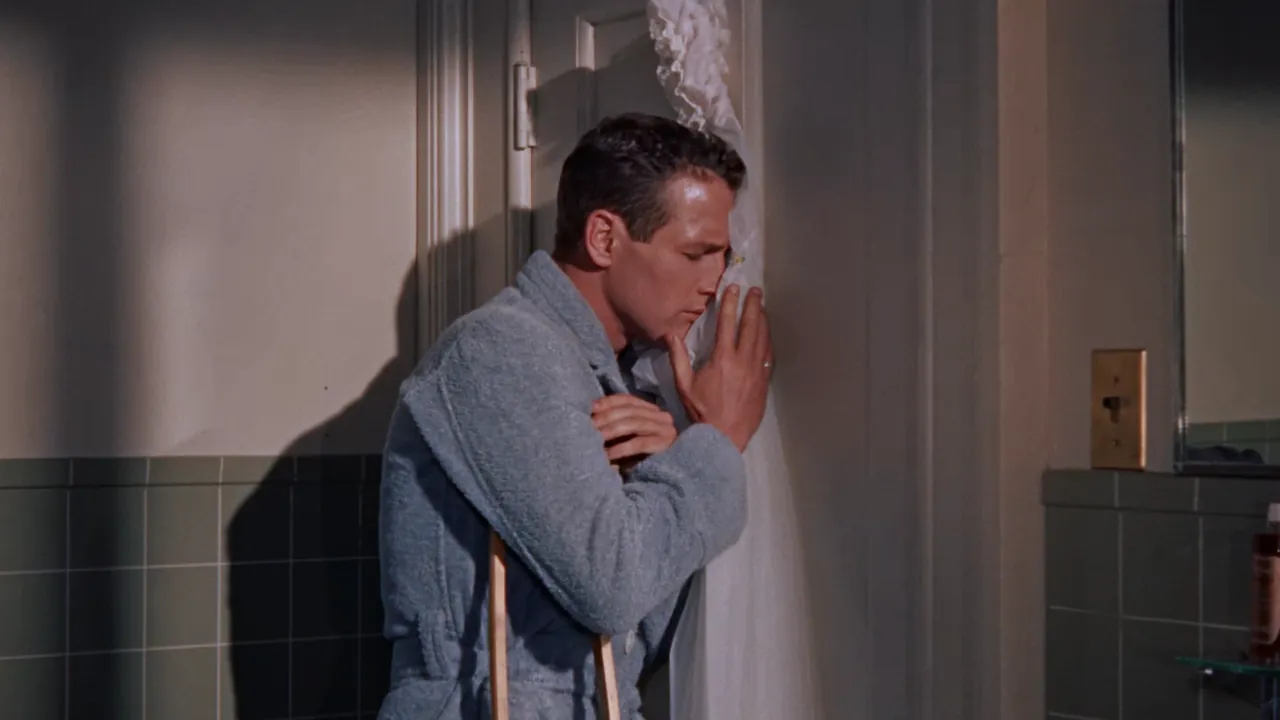
It is very clear that this family has problems expressing love. Even Big Mama, who is completely devoted to her husband, calls desperately for Brick in front of Gooper, screaming, “Where’s my only son?” — which is particularly cruel considering that Gooper has spent his entire life trying to be the son his parents wanted.
I don’t know if it was intentional, but I could almost physically feel the discomfort that the children and Mae caused Big Daddy. I actually had to turn the volume down to get through some of those scenes. His birthday party was torture for him; he wanted nothing but peace and quiet. He could barely stand his family, not even his own wife.
Big Daddy was also terrible at recognizing or accepting other people’s love, almost as if he couldn’t imagine that someone could genuinely love him. But Big Mama did, as she tells him:
In all these years, you never believed I loved you. And I did. I did so much. I even loved your hate and your hardness.
To me, Maggie and Big Mama are the two characters who love the most — or at least the ones who show it most openly. Maggie loves Brick even when he literally wipes her kiss off his mouth. Even when he pushes her away. Even when he is so self-centered that he refuses to stop and listen to what she has to say about the night that drove them apart.
There is also something sad about the similarity between Maggie and Big Mama. Both women keep loving men who repeatedly reject them. Big Mama almost feels like a possible future version of Maggie if Maggie remains on that “hot tin roof” for decades without anything actually changing.
That night is one of the climaxes of the movie. Brick thinks he knows what happened on the night of his friend’s death. He imagines Skipper in bed with Maggie and is genuinely surprised when she tells him that it never happened. Personally, I think that deep down he already knew, or at least didn’t want to hear anything that would complicate the version of the story he had spent so long believing. He didn’t want to hear how his best friend kissed Maggie, how she turned him down, and how Skipper later lied by saying that he had actually slept with her.
Brick and Skipper’s relationship is much deeper than a fight over a woman. Even if we consider only the Maggie situation, it wasn’t really about carnal desire. Skipper wanted Maggie out of Brick’s life so that they could return to the freedom of their old lives together.
The movie doesn’t explore this directly, but Tennessee Williams’s original play gives the relationship between Brick and Skipper much stronger romantic and sexual undertones, adding another layer to Brick’s self-hatred. That part was heavily softened in the film adaptation. Even without it, though, Brick still carries an enormous amount of disgust toward himself.
That becomes clear when we learn what happened on the night Skipper killed himself. After drinking all night and trying to kiss Maggie, Skipper calls Brick and tells him that he had slept with Maggie. Brick hangs up. Skipper calls again. And again. And again. Brick never answers.
Then Skipper commits suicide.
When Brick drinks, the sound he is trying to escape from is the ringing phone. He has been directing his pain toward Maggie and blaming her for his friend’s death when, in reality, the person he hates most seems to be himself.
When his father questions him about his drinking, Brick explains:
There’s a click in my head that makes me feel peaceful. It’s like a switch, clicking off in my head. It turns the hot light off and the cool one on, and all of a sudden, there’s peace. I’m waiting for that click and I don’t get it unless I’m all alone, I’m talking to no one, when there’s absolute quiet.
The quiet he is looking for is the ringing of the phone finally stopping. It is his guilt over his friend’s death finally going silent.
That made the “click” one of the most interesting parts of Brick’s alcoholism to me. He isn’t drinking simply because he is sad. He is drinking until he no longer has to experience himself. Alcohol becomes less of a pleasure and more of an anesthetic.
Brick looked up to Skipper, and Skipper let him down. But Brick didn’t truly despise Maggie. I think he felt disgust for Skipper and, even more strongly, for himself. Skipper depended heavily on Brick: when he had to play an important professional game without him, he fumbled, stumbled and fell apart.
On offense, he was useless. On defense, he was a coward.
The strange thing is that Skipper fell apart emotionally after the game too, terrified of what Brick might say or think. It reminded me of Brick’s own relationship with Big Daddy. Skipper seemed to look at Brick with the same fear and need for approval that Brick had toward his father. But Brick wasn’t angry with Skipper after the game. Brick was falling apart too, watching his own football career disappear. What could he do?
How does one drowning man help another drowning man?
To avoid admitting that he was drowning too, Brick hung up the phone and refused to answer when Skipper called back. And this is where the parallel becomes particularly sad: Brick spends so much of the movie resenting Big Daddy for not being the father he could rely on, yet when Skipper desperately needed Brick, Brick also became emotionally unavailable. Without realizing it, he repeated one of the things he hated most about his father.
The mendacity Brick keeps bringing up changes meaning at this point. Before, he used it to accuse everyone around him, but now it becomes something that applies directly to him. He says he drinks because he is disgusted by mendacity, but isn’t he just as dishonest as the other members of his family?
He kept his wife in an emotional cage because he was too afraid to face the facts and confront his own actions. He was the one who ignored his friend’s calls. He was the one who drank every day and every night to escape his own mind. He relied on alcohol to hide from the truth — the very thing he claimed to value above everything else.
Brick hates mendacity in everyone else, but his entire way of coping with life depends on running from reality.
Maybe that is because life isn’t black and white. As Maggie says, the truth is as dirty as lies. Brick claims to want the truth, but he refuses to face it. He refuses to listen, to talk, to feel, and, most importantly, to acknowledge his own responsibility. His mendacity is therefore not always about telling literal lies. Sometimes it is simply refusal: refusing to listen to Maggie, refusing to answer Skipper, refusing to face his guilt and eventually drinking until he no longer has to feel anything at all.
After the whole Skipper situation becomes clearer, we reach another climax — if we can even call it that, considering how many emotional climaxes this movie has. This time, it is the tense conversation between Brick and his father.
It becomes clear that neither son ever truly felt loved by Big Daddy. Gooper did everything his father asked of him: became a lawyer, got married and had children, and somehow it still wasn’t enough. At some point, he stopped begging for his father’s love and started fighting for his money and his empire instead. But Brick reacts differently. He still wants his father’s love. He can barely stand watching Big Daddy in pain. In fact, one of the only moments in which Brick shows genuine tenderness toward another person is when he cares for his father while he is hurting.
And it all comes back to Brick’s relationship with Skipper. Brick relied so heavily on Skipper because he felt that he couldn’t rely on his father.
All I wanted was a father, not a boss. I wanted you to love me.
Big Daddy had his own father’s love, even though his father had almost nothing material to give him. Somehow, Big Daddy couldn’t pass that same certainty of being loved on to his own children. That makes the contrast between money and love even more interesting. Big Daddy built an enormous empire and seems to believe that providing wealth is proof of love, while Brick makes it clear that none of it can replace the affection he actually wanted. Gooper and Brick then become two different reactions to the same wound: Gooper couldn’t get his father’s love, so he fights for his money; Brick couldn’t get his father’s love, so he rejects the money and keeps asking for the love.
My favorite part of the film is when Maggie announces her pregnancy — a blatant lie — and Brick supports her. Their intention from that moment on is basically to make the lie true, and I think that is really beautiful.
It is funny that a movie so obsessed with the hypocrisy and danger of lies manages to end with a lie that I actually support. Brick backing Maggie shows that some of his love for her is finally coming back, and together they intend to turn that lie into reality.
Again, nothing is completely black and white. Not every lie is necessarily evil, and the truth is not automatically good simply because it is true. The doctor’s lie keeps Big Daddy from confronting death. Brick’s lies to himself allow him to avoid guilt. Maggie’s lie is different: instead of using it to escape from the future, she uses it to create one. Maybe that is why I can forgive her mendacity when I couldn’t forgive Brick’s.
It also feels like Maggie’s final way of refusing to jump off the hot tin roof. She stayed on it for as long as she could, and maybe, finally, it is becoming safe enough for her to climb down. And maybe that is her victory. The “cat” doesn’t win because the roof stops being hot. She wins because she stays long enough for something to change.
The movie doesn’t rely on complex scenes or elaborate settings, but it has incredible dialogue brought to life by amazing actors. Elizabeth Taylor, Paul Newman and Burl Ives play their characters with such intensity that we can see the internal fight happening inside each of them. The pain in their faces and eyes often says as much as their dialogue does.
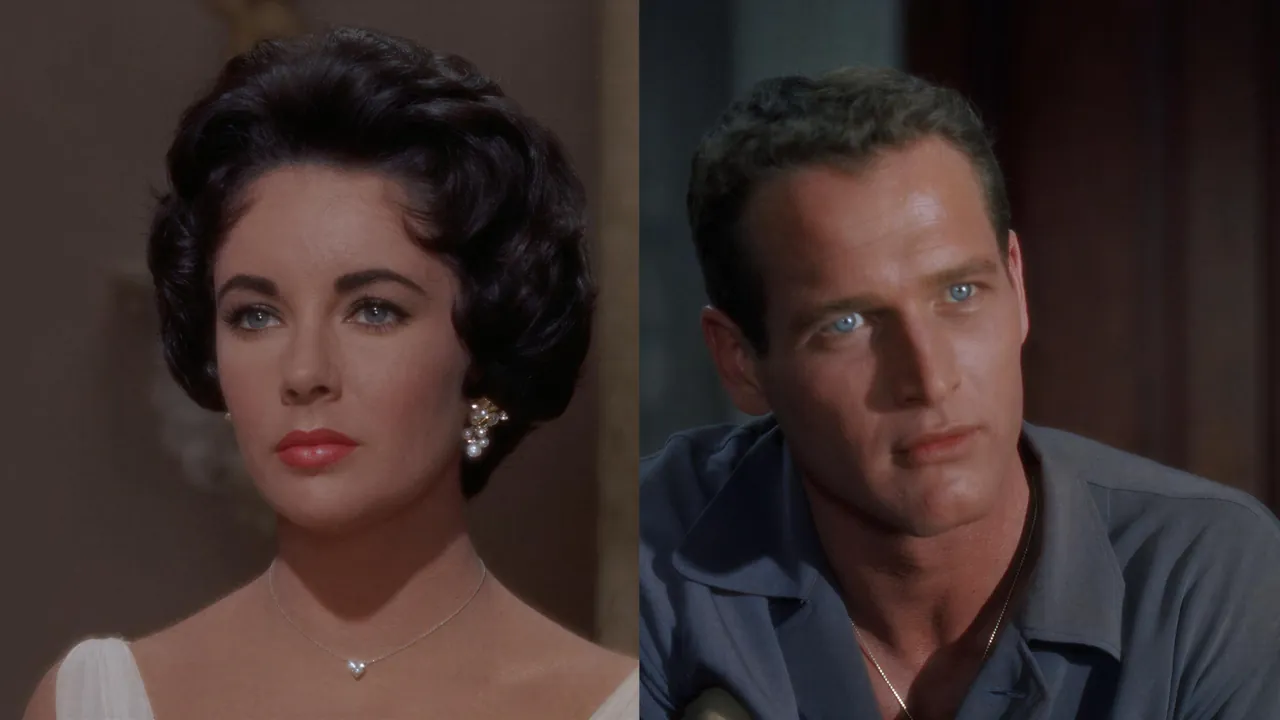
The combination of the characters, the dialogue and the limited setting gives the movie an almost theatrical feeling, as though it trusts the actors and their delivery much more than elaborate scenery or spectacle.
And maybe that is one of the reasons my first thought after finishing it was that I needed to watch it again. There is so much happening underneath what these characters actually say that knowing the truth about Brick, Skipper, Maggie and Big Daddy would probably change the way I read many of their earlier scenes.
For a movie so concerned with people refusing to face the truth, I think its greatest strength is how slowly it forces both Brick and the audience to do exactly that.
What made me watch this movie?
I’m part of a book club, and our current pick is The Seven Husbands of Evelyn Hugo. Elizabeth Taylor is one of the actresses often associated with the kind of Old Hollywood star that Evelyn represents, so before starting the book, we decided to watch Cat on a Hot Tin Roof to get a better feeling for the kind of movies Evelyn would have been making during that period. And I’m so glad we did. Realistically, there was almost no chance I would have chosen a movie from 1958 on my own without some very specific motivation like this one. Instead, I finished it thinking, “I need to watch this again.” So even before starting the book, I already feel like this was one of the best choices we could have made.